Notes from publishing Brown Voices, which began as my Ed.D. research at Johns Hopkins. For what happened with the first edition, read the story behind Brown Voices.
An honest guide from someone who’s done it, and learned the hard way what to do differently…
If you’re finishing an Ed.D., or you’ve just defended, you’ve probably had at least one person suggest you should write a book. It might have been a friend or family member watching how much work went into your dissertation; maybe it was a committee member; maybe it was just you, sitting there with your bound copy, wondering how to get the guts of the dissertation out into the world.
If you’re already finished with your Ed.D. and you’re now wondering “should I write a book,” the answer is: probably, yes.
And if you’re wondering “should that book be my dissertation itself, sent to an academic press?” the answer is: almost certainly no.
I’m going to explain why, along with everything I wish I’d known earlier. Here’s the short version:
- Your research is more useful (and to more people) than the academic framing around it suggests.
- Ed.D.s are not Ph.D.s, and pretending they are is a trap that will cost you time (and potential money).
- Academic and “traditional” publishing for education writers is, statistically, a bad deal. And the offers are often awful.
- Self-publishing, when done well, is almost always the better fit for an Ed.D. who wants their research to actually reach the people it’s about.
I’m saying all of this as someone who’s been through it. I have an Ed.D. and I wrote a trade book based on my doctoral research, signed with a traditional publisher, watched the book get priced out of the audience it was written for, and spent five years fighting to get the rights back. I now self-publish — including the rerelease of that same book, on my own terms. So the guidance I’m offering here isn’t theoretical.
Here’s what I wish I had known before I trad-published my academic book.
1. Your research is more useful than you think.
One of the weirdest features of doctoral training is how it teaches you to underestimate your own work. After three to six years of defending and researching and getting committee feedback, and tweaking your methodology, and fitting your ideas into a narrow scholarly conversation, most candidates come out the other side convinced their research is interesting… to a very small group of experts. But for most Ed.D.s, that’s NOT true.
EdDs are often working within their practice, so the research is very much embedded in the real world. Forget your dissertation for a second, and think about your conclusions. Then ask yourself: who would care to hear about this? Those are the readers of your research: anyone who would care about the conclusion.
Think about who the readers for your research actually are. Not the five members of your committee — the people outside your institution who would benefit from knowing what you learned. For most Ed.D. research, that audience is large:
- Teachers who are dealing with the exact problem you studied
- Principals and district administrators trying to make better decisions
- Parents trying to understand what their kids are experiencing
- Policymakers — local, state, and national — who are making rules that affect millions of kids
- Ed.D. students in your field who are looking for well-written, accessible research to build on
- Journalists and education writers looking for sources
- Consultants and nonprofit leaders working on adjacent problems
The version of your work that those people need is not your dissertation. Your dissertation was written for your committee… it has the literature review, the methodology chapter, the acknowledgments of every existing scholar’s work on the topic, and the carefully hedged conclusions that academic writing demands.
None of those things serve the teacher who just wants to know what you found and how it helps her classroom.
But what’s inside your dissertation—the actual research, the actual findings, the real insight—almost certainly does matter to those people. The job of turning that into a book is the job of pulling the useful thing out of its academic packaging and rebuilding it for the people who need it.
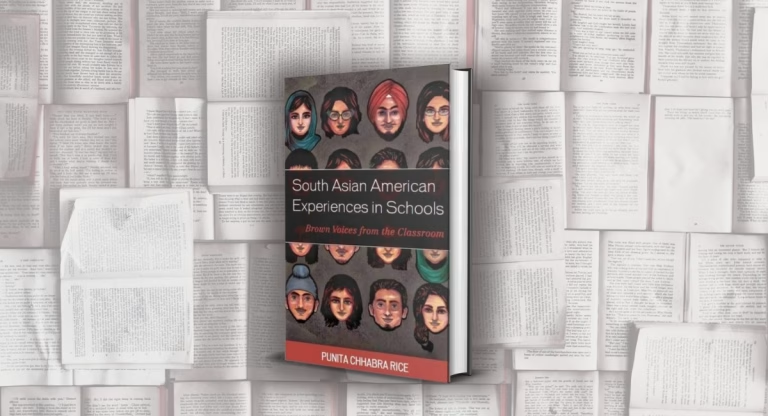
My research on South Asian Americans’ experiences in schools genuinely mattered to a broad readership that extended well beyond my dissertation committee. The work examined how the “Model Minority Myth” impacted the support students received (or didn’t) throughout their schooling—the kind of thing that South Asian American adults, and certainly teachers of South Asian American students, would be interested in reading about. Writing about the research in a trade book should have meant that research was now widely accessible to anyone who wanted to read it.
2. Ed.D. ≠ Ph.D., and mistaking one for the other will cost you.
This is the part that almost nobody in your program will tell you, probably because most of your professors have Ph.D.s, and the framing of what a doctorate “should” lead to is shaped by their trajectory, not yours.
Statistically, Ed.D. graduates do not go into tenure-track academic positions.
Most Ed.D.s are already working, or return to working, as practitioners: K-12 administrators, principals, superintendents, instructional coaches, central office leaders, consultants, nonprofit leaders, state and federal education staff, teacher-leaders. Ph.D.s in education are more likely to end up on tenure tracks, but even they face a shrinking job market where academic publishing is less and less tied to meaningful career outcomes.
This matters because the entire mental model of “I should publish my dissertation as an academic book” is built around a tenure-track career. Academic monographs are currency in the tenure economy. Outside that economy, they are mostly INVISIBLE.
A K-12 superintendent with an academic monograph is not meaningfully more hireable or more influential than one without. A consultant whose book is stocked in eleven university libraries (and nowhere else), with books priced at $100+ each, has not actually built a platform or reached his desired audience.
If you are on a tenure-track Ph.D. path in an R1 education school, an academic book may very well be the right call, and the advice in the rest of this post doesn’t necessarily apply to you.
But if you’re an Ed.D., which statistically means you’re already a practitioner or headed back into practice, then the right book for you is almost certainly not the book your program implicitly assumes you’ll write.
What does build a platform for an Ed.D. education practitioner? Content that real practitioners actually read! It could be a book assigned in teacher preparation programs or that district leaders hand to their incoming principals. It might be a book a parent can grab at the library. It might be a book with ideas that get cited in Education Week or EdSurge or the local paper or a policy brief.
3. Traditional academic publishing may hurt you.
What most academic writing guides won’t tell you is that traditional publishing isn’t “more real,” academic publishing tracts aren’t fair, and academic books don’t generally do numbers. So, here are some things to know right out the gate.
Traditional publishing doesn’t automatically makes your book “real”
Getting an academic or traditional publisher to take your book doesn’t mean your book is any more “real” than if you self-published. All it means is that one of the publisher’s acquisitions editor thought your book might sell, or fit a slot in their catalog, or could be assignable as a course text. It doesn’t mean it’s automatically GOOD, it doesn’t mean the book will automatically find readers, it definitely doesn’t mean your career will magically change. It just means that for the aforementioned business reasons, a publisher decided to take a small bet on your book.
Traditional academic publishing probably won’t make you rich.
Traditional publishing contracts and in particular academic press contracts (especially for first-time authors) are NOT. FAIR. DEALS. FOR. THE. AUTHOR. A sample offer might include:
- An advance of $0 to maybe a few thousand dollars
- Royalty rates anywhere between 3 and 10% on copies sold, but paid on net receipts rather than list price (which can effectively cuts the royalty in half)
- Rights assignments that can tie up your work for years (sometimes forever)
- Minimal to zero marketing support; the expectation is you will market the book yourself
- Restrictive clauses on derivative works, translations, and digital formats
- Non-compete clauses that can limit what you can publish next
Academic publishing operates on thin margins with a small buyer base. The economics don’t support generous author terms. Their offers benefit THEM, and the author takes on the majority of the risk (and marketing work) while collecting peanuts on the revenue.
Which leads me to my next point…
Academic books don’t “sell well.”
This is probably the thing that’s hardest to swallow: most academic books don’t sell.
The average academic monograph sells under 500 copies in its lifetime and many don’t break 200 total sales. And that’s not a failure of individual books, it’s literally the structure of the market.
If you sign an academic publishing contract imagining your book will reach “the field” in a meaningful way, you’re very likely going to be disappointed.
This is worsened by the reality that academic publishers price your book as a textbook, and don’t expect to sell massive quantities. They expect to sell fewer books at a higher price.
In my own contract for South Asian American Experiences in Schools, I wasn’t able to set the price for the book, which meant the book was priced exorbitantly high (as academic books often are), which meant the research was locked behind a tall paywall; abnd while universities used pre-allocated funds to purchase copies, regular people—the kind I wanted to reach!—were not reading the book, because it was $100+ for a hardcover and $50+ for a paperback.
→ You can read the entire story of how I fought for rights reversion here!
On my end, this also meant less net sales, which I couldn’t move the needle on because the price was so high.
4. Self-publishing, done well, is almost always the right fit for an Ed.D.
When most people hear self-publishing, they think of one of two things: either Amazon-filler books with cartoon covers, or the “publish anything for $9,500” vanity press scams that prey specifically on academics and first-time authors. Neither of those is what I’m recommending.
Real self-publishing — the kind where the book looks and reads indistinguishably from a trade-published book, is well-edited, well-designed, and findable by readers — is a legitimate and increasingly respected path. I’ve done it across genres now (fiction, nonfiction, children’s books) and my self-published work sits in libraries, bookstores, and on syllabi alongside trade-published work.
For an Ed.D. specifically, self-publishing gives you:
- Full control of the manuscript. You get to decide what goes in, what gets cut, how the ideas are framed, and who the book is for.
- Royalty rates of 35–70% (compared to 2–10% from an academic press), on list price, paid monthly.
- Speed. You can go from finished manuscript to published book in weeks, not the 18–36 months academic presses typically require.
- Rights retention. You keep everything. You can make a paperback, ebook, hardcover, audio, workbook edition, translation, course, whatever you want, whenever you want.
- The ability to update. Research changes. Policy changes. In education especially, a book that can’t be updated is obsolete fast. Self-published books can be updated in an afternoon.
- Teacher and practitioner accessibility. Unlike an academic press, you can deliberately price a book for the audience who needs it — which for most Ed.D. research, is teachers, administrators, and parents, not university libraries.
- The freedom to price for your audience. You can price at $12 for teachers. You can give bulk discounts to districts. You can put the ebook at $4.99 to get it in more hands. An academic press will price it at $50 for a paperback and $100 for a hardcover. They can’t compete with you.
The tradeoffs are real too, and worth naming: you will need to do your own editing (or hire one), your own design (or hire one), your own launch, and your own marketing. You won’t automatically be in university libraries — you’ll have to pitch your way in. Some academic reviewers will take a self-published book less seriously, though this is changing quickly.
The audience you actually want to reach doesn’t actually care where the book was published. They just care if it’s useful.
But for a practitioner-scholar whose audience is teachers, administrators, policymakers, and parents, none of those tradeoffs are deal-breakers. The audience you actually want to reach doesn’t actually care where the book was published. They just care if it’s useful.
What it takes to self-publish well
If you do go the self-publishing route, know that there are self-published books that feel self-published, and then there are beautiful books that happen to be self-published. The difference is getting every part of the process right, not just the writing. Five things matter most.
1. The manuscript has to be truly ready
Finishing a draft is not the same as finishing a book, but it’s the step-zero of the entire process. Before you can start the self-publishing process, you need a completed, strong manuscript, which means:
- for fiction, a clear structure to the plot / narrative arcs
- for nonfiction, a clear organization structure for the content
- characterization that feels consistent/authentic throughout
- consistent pacing throughout the story
- language that feels consistent throughout
This is also where editing is critical. There are different levels of editing that serve different purposes:
- Developmental (structure, clarity, flow)
- Line editing (sentence-level refinement)
- Copyediting (grammar, consistency)
Good editing is invisible, meaning the reader can’t feel the edits. (But the absence of good editing is obvious, and makes a book (self-published or traditionally published) feel unpolished.)
So before you can start the self-publishing process, the manuscript has to go through all the steps of editing first, to go from “done draft” to ready manuscript.
2. You need clarity on what your book is, who it’s for, and why it matters
If you want your finished product to be something you’re proud of, you have to start from the very beginning. Every decision from manuscript to cover to pricing should work together harmoniously. Before you publish, you need to be able to answer:
- What kind of book is this?
- Who is it for?
- Why would someone pick it up?
The downstream effects of your answers will include your cover, the aesthetic of the book’s interior, the description, the title, the marketing, even your website. (And in turn, each of these you’ll want to use to actively reinforce your answers to the above question).
→ If you’re an Ed.D. candidate or other academic-adjacent writer thinking about your own publishing path, you might also be interested in Should Ed.D. Candidates Write a Book?
Intention and outcome aren’t always going to be easily connected here but it’s a guarantee that if you go in without a clear answer to the three big questions, you’re going to have confusing messaging around the book’s entire vibe… which is going to have weird effects on who reads it, and therefore how it’s received by your readers. Garbage in = garbage out.
Publishing your book needs to account for how all components of the “final product” will be perceived, as well as consumed based on market position. This means you have to think about the potential perception of…
- your title
- your cover
- the book’s description and blurb
- the marketing online
- your pricing
Without CLARITY in the purpose of your book, even a strong manuscript can feel unfocused.
3. Design shapes how your book is perceived
Readers make decisions quickly and your title and cover are the first signals you have to communicate:
- what kind of book this is
- whether it feels credible
- whether it’s worth your readers’ time
→ You can read about how I designed the cover for a “how to” book here.
While sure, you shouldn’t judge a book by its cover, your potential readers will absolutely judge your book’s cover to determine if (1) what your book is, (2) whether or not they’re your book’s intended audience, and (3) if they’ll get something out of reading your book.
4. Pricing and positioning determine accessibility
Publishing requires that you plan, thoughtfully, how to position your book in context of comparable books. Your bottom line has to account for printing costs, distribution costs, any overhead for your self-publishing efforts, etc.
But it also has to be positioned appropriately next to similar books and, more to the point, must align with what the market will bear. When it doesn’t, people who might have been ideal readers for your book will simply be locked out.
I experienced this firsthand with a traditionally published academic book, where pricing and positioning made the work far less accessible than I ever wanted (the hardcover was nearly $100; the paperback was almost $50), which means the reach of the findings was minimal. I’ve written more about that experience, and why I fought for rights reversion and decided to re-release it as a self-published book under my own imprint on my personal site, punitarice.com.
5. Professional self-publishing is about how everything works together
Uploading to Amazon KDP is the final step—not the process itself. Behind that step is:
- formatting the manuscript correctly
- setting up metadata (categories, keywords, description)
- choosing trim size, paper style
- making sure the manuscript accounts for the above
- getting the pricing right (which is also contingent on trim size!)
- reviewing proofs and making final adjustments
A lot of times, self-published projects are… fine. They miss the mark just barely because:
- the manuscript is almost there
- the cover is almost right
- the positioning is almost clear
- the pricing is almost right
But self-publishing can be done well.
So can you self-publish a book professionally on your own?
Yes!!!! Many authors, myself included, absolutely do. As long as you have…
- an understanding of how many moving parts are involved (checklist brain)
- …and simultaneously, the understanding that it’s not just checking boxes, and a great deal of judgment is required at each stage
- someone who can provide outside input along each step
- an understanding of how difficult it is to see your own work objectively
- the time and commitment to learn every step along the journey
- the risk-tolerance for making a costly or irreversible mistake along the way
Then yes, you absolutely, 100% can cultivate all of these things in order to self-publish entirely alone.
Should you turn your dissertation into a book?
Here’s a short self-assessment on whether you should turn your Ed.D. dissertation into book—answer these four questions honestly.
1. Who would read this book if it existed, and do I actually care about reaching them?
If the only readers you can imagine are your committee and a few scholars in your subfield, don’t write the book. Write journal articles. Books require audiences outside academia to be worth the work.
2. Am I willing to rewrite the dissertation, not just reformat it?
A trade book from a dissertation is a 6-to-18-month rewrite. New structure, new voice, new framing, often new chapters. If you want to take your existing dissertation and publish it as-is, you’re not ready to write a book yet. You’re ready to revise your dissertation.
3. What outcome am I actually after?
Be specific with yourself. Career mobility? Speaking opportunities? Consulting work? Impact on the field? Income? Different goals lead to different kinds of books. “I want to feel like I have a book” is not a good enough reason. A book will not, on its own, make you feel any particular way, and it’s a lot of work to find that out.
4. Am I willing to build an audience for the book over time?
This is the part most first-time authors underestimate. Books don’t sell themselves. The Ed.D.s whose books actually get read are almost always the ones who spent a year or two building a newsletter, a blog, a conference presence, or a consulting practice alongside the writing. The book accelerates a platform you’ve already started. It rarely creates one from nothing.
If you answered honestly and you’re still a yes on all four, then yes, you should write a book. Probably not the dissertation you already wrote, but a real book, for real readers, on the subject you actually spent years of your life studying. Your research deserves it, and so do the people the research is about.
Related
My own academic-publishing story, including the five-year fight to get my rights back: The Story Behind Brown Voices. And the book itself: Brown Voices.
One last thought: if you’re an Ed.D. candidate, please know your research matters, and the people it’s about deserve to read it!! Don’t let a predatory contract or a misaligned publishing path keep that from happening.