Pinkal Panchal hears firsthand what South Asian kids actually say when they come home from another day of feeling like outsiders.
Pinkal is an associate marriage and family therapist in Los Angeles. She helps relationships work inside traditional, multi-generational families, and she works with couples, families, kids, and teenagers. Which puts her on the front lines of what South Asian kids are going through.
We talked about what she’s hearing inside South Asian American families, what it costs kids when the pressure never gets named, and what families can do differently.

Recorded July 2026.
In this episode
- The pressure she sees most in South Asian kids
- Kids who don’t want to bring Indian food to school
- “Too Desi for the Americans, too American for the Desis”
- Why “behave like Indians” plants the wrong seed
- Why telling kids “you’re strong” can backfire
- Five things South Asian families need to hear
What she’s seeing in the therapy room
Pinkal gets something researchers usually don’t: a real-time look at the inner lives of the kids living all of this. Instead of reading data from a distance, she’s sitting with the kid who just got home from school.
What she sees most is pressure.
“There’s so much pressure within South Asian kids. And it’s the whole idea of you just cannot be dumb. You have to do great in school, in math, in science. You have to be either a doctor or engineer. You don’t have any other choice. Because if you deviate, if you do something else, you basically won’t excel.”
Pinkal Panchal
She also sees kids quietly absorbing how their peers talk about South Asian culture… and then talking about it the same way.
“Kids who don’t want to bring food to school, who don’t want to wear Indian clothes. The parents are saying: “this is our culture, you should be proud.” And the kids come into the therapy room and say: “why just us? Why do I have to eat that stinky food?”
Pinkal Panchal
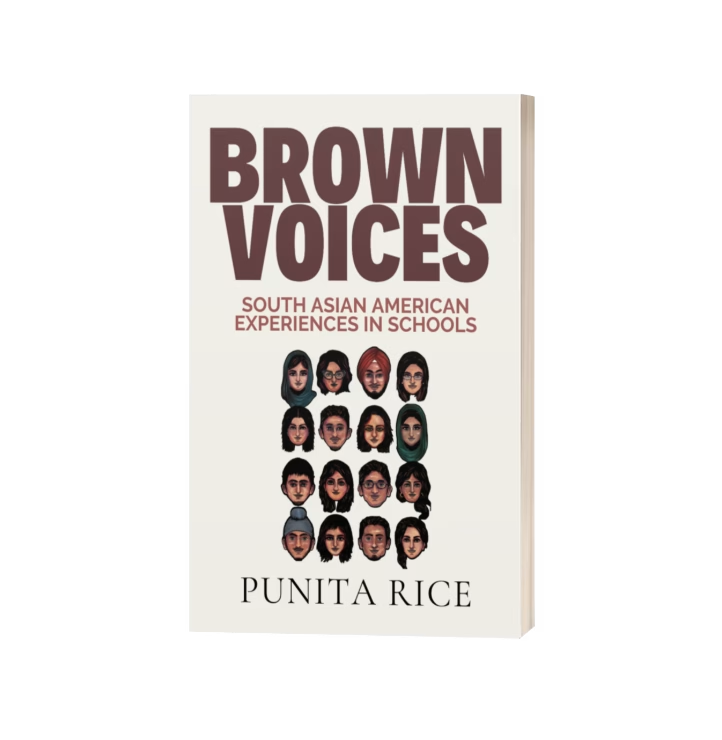
They take someone else’s opinion of their food and make it their own. That’s a pattern all over the research in Brown Voices: the way South Asian American kids get othered at school shapes how they see themselves, too.
(Related: what the research says about supporting South Asian American students)
“Too Desi for the Americans, too American for the Desis”
The dual identity thing (very Indian at home, trying to fit in at school) is one of the most documented patterns in the research. What Pinkal adds is what that split actually does to kids over time.
“That’s the whole segment where they feel like: “we’re too Desi for the Americans and we’re too American for the Desis. So where are we?”
Pinkal Panchal
She’s seen teenage girls develop a disdain for their own community. Not because they actually hate being South Asian, but because being South Asian has become the thing that makes them feel like outsiders.
And in the hardest cases, it goes further:
“They’ve started questioning their own existence. That is the saddest part. The lines I hear in the therapy room: “I wish I was white.”
Pinkal Panchal
The language that plants the wrong seeds
We also talked about the things parents say without realizing what they’re teaching. The phrase Pinkal comes back to again and again: behave like Indians.
“You’re actually putting in your kids’ minds that they’re different. You’re planting a seed. When you say “behave like Indians.” What does that mean? Are you saying give up your autonomy? Your freedom? You’re not allowed to have choices? To set boundaries?”
Pinkal Panchal
The problem isn’t the rule. It’s calling the rule “Indian,” which teaches a kid to connect being Indian with restriction instead of pride.
She hears pressure coming from more than one direction, too:
“One of the things I’ve heard from parents: “you’re not pretty, so you can’t afford to be dumb.”
Pinkal Panchal
Rather than motivation, that’s a kid carrying a weight that has nothing to do with school.
Why telling kids “you’re strong” can backfire
Pinkal told me about a friend who, after she shared something hard, said: you don’t have to if you don’t want to. Her reaction:
“Do we have that option in our culture? “You don’t have to if you don’t want to.” I don’t think I have a choice.”
Pinkal Panchal
That permission (to not do something) is exactly what a lot of South Asian kids in her therapy room don’t have, and it matters.
“When you keep telling kids that you’re strong, they just can’t come out and tell their parents: “hey, I’m weak.” And that is a problem.”
Pinkal Panchal
Five things South Asian families actually need to hear
By the end, we’d landed on five pieces of advice for South Asian American families:
1. Empathize.
Understand what your child is actually going through, not what you think they should be going through. Sit with them in it.
2. Don’t minimize.
“It’s okay, you’re strong” and “so what, move on” can be forms of minimizing.
3. Don’t compare.
Whether intentional or not, comparison creates labels. The offhand remarks (the unintentional language used at home) are the ones that shape a child’s sense of who she is and what she’s worth.
4. Don’t add more pressure.
There is already pressure everywhere: at school, in peer relationships, in the wider world. Adding to it at home builds silence, not resilience.
5. Help them love their culture — without forcing it.
Which brings us to the last section…
Plant the seeds. Then wait.
To help a kid love a culture they currently associate with feeling different, Pinkal says, model it. Don’t lecture.
“If they catch negative, they also catch positive. You don’t have to make them sit and listen to a five-hour lecture about how beautiful our culture is. Just have those conversations near them. Two aunties talking about how beautiful the Garba was. Kids at the other end of the room. They’re always listening.”
Pinkal Panchal
When kids get curious about their background on their own (and in her experience, a lot of them do), it sticks.
“You don’t force the outfit, the food, the participation. You plant the seed. You water it. And you wait — sometimes for years… Plant the seeds. Slowly keep watering. Nurture. Wait. You can’t plant a seed and have the tree grown the next day.”
Pinkal Panchal
She also suggests explaining the why behind things.
“When kids get a little more mature, they want to know — curiosity, why? When you get to know the answers behind the do’s and don’ts of your culture, and those answers connect with you — that’s when you start loving your culture.”
Pinkal Panchal
And a kid who loves her culture has something to stand on when school makes her feel like an outsider for it.
Links from the episode
- Pinkal Panchal on Instagram
- Therapist Zohra Lasi on log kya kahenge
- Jyoti Chand (Mamajotes) on growing up between two worlds
- How teachers can support South Asian American students
Questions
Who is Pinkal Panchal?
Pinkal Panchal is an associate marriage and family therapist based in Los Angeles who works with couples, families, kids, and teenagers, focusing on helping relationships thrive inside traditional and multi-generational family systems.