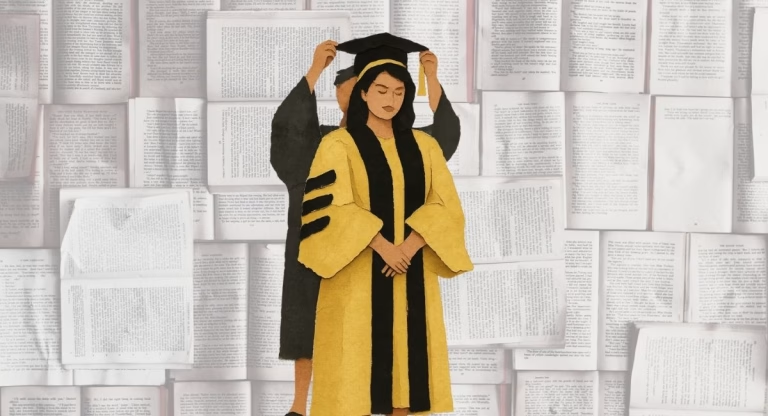
Nearly half of the participants in my study on South Asian American experiences in schools said their teachers didn’t understand them: who they were, or what they needed. For a lot of them, that disconnect was tied directly to culture and race. Some, post-9/11, talked explicitly about feeling discriminated against, even by teachers.
So what actually helps when kids feel disconnected at school? In the research, a handful of protective factors came up again and again: things that made kids feel like their experience in school was okay. And most of them are things families can influence.

1. Keep them connected to their own cultural community
Connection to their own cultural community was one of the protective factors. That can look like time at the gurdwara, mandir, masjid, or community center; language or dance classes; festivals; or just regular time with family friends’ kids. Somewhere they don’t have to explain themselves.
2. Help them find community outside it, too
Connection to members of other communities mattered as well. Basically, finding community in general. Teams, clubs, neighborhood friends, and activities that have nothing to do with being South Asian all count.
3. Treat friendships as important
Having friends was a protective factor on its own. Friendships aren’t a distraction from school; for a lot of kids, they’re what makes school bearable. Make room for them.
4. Keep the lines of communication open
Having open lines of communication with parents was a big one. Ask about school beyond grades: who they sit with, how teachers treat them, whether anyone says their name right. And when they tell you about something that felt off (a comment, an assumption, a microaggression), listen before you minimize it or fix it.
5. Support a strong sense of self, inside or outside their culture
A strong sense of self was protective whether it existed within or outside of a kid’s culture. That means letting them figure out who they are, even when it doesn’t match exactly what you pictured. (Related: what it means when kids simplify their names.)
6. Help them connect with at least one adult at school
Feeling connected to one of the adults in the building was considered an important protective factor. One. A teacher, a counselor, a coach, a librarian. You can help by getting to know your child’s teachers, asking which adults your kid likes, and sharing resources like How Teachers Can Support South Asian American Students and the research findings with their school.
For more from people who work with South Asian kids and families every day, listen to therapist Pinkal Panchal on family pressure and Zohra Lasi on what Desi kids actually need.
These protective factors come from my research, which is the basis of my book Brown Voices: South Asian American Experiences in Schools. It’s written for teachers, researchers, and parents of South Asian American kids, and for South Asian American adults who want to see their own experiences reflected back at them.
Questions
What helps South Asian American kids who feel disconnected at school?
In Dr. Punita Rice’s research, protective factors included connection to their own cultural community, connection to other communities, having friends, open communication with their parents, a strong sense of self (within or outside their culture), and feeling connected to at least one adult at school.
How can parents help if their child feels teachers don’t understand them?
Keep the lines of communication open and listen before minimizing or fixing, help your child connect with at least one adult at school, and share research-based resources on supporting South Asian American students with their teachers.
What research is this based on?
Dr. Punita Rice’s doctoral research at Johns Hopkins University on South Asian American experiences in K–12 schools, which is the basis of her book Brown Voices: South Asian American Experiences in Schools.